Search This Blog

The Monkey's Paw by W.W. Jacobs Summary


“Be careful what you wish for, you may receive it.” – Anonymous

PART ONE

Outside, the night was cold and wet, but in the small living room the curtains were closed and the fire burned brightly. Father and son were playing chess; the father, whose ideas about the game involved some very unusual moves, putting his king into such sharp and unnecessary danger that it even brought comment from the white-haired old lady knitting quietly by the fire.

“Listen to the wind,” said Mr. White who, having seen a mistake that could cost him the game after it was too late, was trying to stop his son from seeing it.

“I’m listening,” said the son, seriously studying the board as he stretched out his hand. “Check.”

Mr. White was extremely disappointed in his failure.

“Never mind, dear,” said his wife calmly; “perhaps you’ll win the next one.

As the gate banged shut loudly and heavy footsteps came toward the door.


The old man rose quickly and opening the door.


“Sergeant-Major Morris,” he said, introducing him to his wife and his son, Herbert.

The Sergeant-Major shook hands and, taking the offered seat by the fire, watched with satisfaction as Mr. White got out whiskey and glasses.


After the third glass his eyes got brighter and he began to talk. The little family circle listened with growing interest to this visitor from distant parts, as he squared his broad shoulders in the chair and spoke of wild scenes and brave acts; of wars and strange people.


“Twenty-one years of it,” said Mr. White, looking at his wife and son. “When he went away he was a thin young man. Now look at him.”


“I’d like to go to India myself,” said Mr. White, just to look around a bit, you know.”

“Better where you are,” said the Sergeant-Major, shaking his head. He put down the empty glass and sighing softly, shook it again.


“I should like to see those old temples and fakirs and the street entertainers,” said Mr. White. “What was that that you started telling me the other day about a monkey’s paw or something, Morris?”

“Nothing.” said the soldier quickly. “At least, nothing worth hearing.”

“Monkey’s paw?” said Mrs. White curiously.

“Well, it’s just a bit of what you might call magic, perhaps,” said the Sergeant-Major,


His three listeners leaned forward excitedly. Deep in thought, the visitor put his empty glass to his lips and then set it down again. Mr. White filled it for him again. “To look at it,” said the Sergeant-Major, feeling about in his pocket, “it’s just an ordinary little paw, dried to a mummy.”


He took something out of his pocket and held it out for them. Mrs. White drew back with a look of disgust, but her son, taking it, examined it curiously.


“And what is there special about it?” asked Mr. White as he took

it from his son, and having examined it, placed it upon the table.

“It had a spell put on it by an old fakir,” said the Sergeant-Major, “a very holy man.

He put a spell on it so that three different men could each have three wishes from it.”


The way he told the story showed that he truly believed it and his listeners became aware that their light laughter was out of place and had hurt him a little.

“Well, why don’t you have three, sir?” said Herbert, cleverly.

“And did you really have the three wishes granted?” asked Mrs. White.


“And has anybody else wished?” continued the old lady.


“The first man had his three wishes. Yes,” was the reply, “I don’t know what the first two were, but the third was for death. That’s how I got the paw.” His voice was so serious that the group fell quiet.


“If you’ve had your three wishes it’s no good to you now then Morris,” said the old man at last. “What do you keep it for?” The soldier shook his head. “Fancy I suppose,” he said slowly. “I did have some idea of selling it, but I don’t think I will. It has caused me enough trouble already. Besides, people won’t buy.


He took the paw, and holding it between his front finger and thumb, suddenly threw it upon the fire. Mr. White, with a slight cry, quickly bent down and took it off.

“Better let it burn,” said the soldier sadly, but in a way that let them know he believed it to be true.


“If you don’t want it Morris,” said the other, “give it to me.”

“I won’t.” said his friend with stubborn determination. “I threw it on the fire. If you keep it, don’t hold me responsible for what happens. Throw it on the fire like a sensible man.”

“How can we work with this?”  asked Mr. white


“Hold it up in your right hand, and state your wish out loud so that you can be heard,” said the Sergeant-Major, “But I warn you of what might happen.”

“Sounds like the ‘Arabian Nights’”, said Mrs. White, as she rose and began to set the dinner.


Mr. White took the paw from his pocket and eyed it doubtfully. “I don’t know what to wish for, and that’s a fact,” he said slowly. “It seems to me I’ve got all I want.”


Herbert said, with his hand on his shoulder. “Well, wish for two hundred pounds, then; that’ll just do it.”


“I wish for two hundred pounds,” said the old man clearly.


A fine crash from the piano greeted his words, broken by a frightened cry from the old man. His wife and son ran toward him. “It moved,” he cried, with a look of horror at the object as it lay on the floor. “As I wished, it twisted in my hand like a snake.”


“Well, I don’t see the money,” said his son, as he picked it up and placed it on the table.


He shook his head. “Never mind, though; there’s no harm done, but it gave me a shock all the same.”


An unusual and depressing silence settled on all three, which lasted until the old couple got up to go to bed.


PART TWO

“I suppose all old soldiers are the same,” said Mrs. White. “The idea of our listening to such nonsense!


“Morris said the things happened so naturally,” said Mr. White.


“Well don’t break into the money before I come back,” said Herbert as he rose from the table to go to work.


His mother laughed, and following him to the door, watched him go down the road, and returning to the breakfast table.

She was watching the mysterious movements of a man outside, who, looking in an undecided

fashion at the house, appeared to be trying to make up his mind to enter. In mental connection with the two hundred pounds, she noticed that the stranger was well dressed, and wore a silk hat of shiny newness. Three times he stopped briefly at the gate, and then walked on again. The fourth time he stood with his hand upon it, and then with sudden firmness of mind pushed it open and walked up the path. Mrs White at the same moment placed her hands behind her, hurriedly untied the strings of her apron, and put it under the cushion of her chair.


She brought the stranger, who seemed a little uncomfortable, into the room.


“I – was asked to call,” he said at last, and bent down and picked a piece of cotton from his trousers. “I come from ‘Maw and Meggins.’

“The old lady jumped suddenly, as in alarm. “Is anything the matter?” she asked breathlessly. “Has anything happened to Herbert? What is it? What is it?”


Her husband spoke before he could answer. “There there mother,” he said hurriedly. “Sit down, and don’t jump to a conclusion. You’ve not brought bad news, I’m sure sir,”


“I’m sorry –” began the visitor.


“Is he hurt?” demanded the mother wildly.

The visitor lowered and raised his head once in agreement.” Badly hurt,” he said quietly, “but he is not in any pain.” “Oh thank God!” said the old woman, pressing her hands together tightly. “Thank God for that! Thank – ”


The man had turned his head slightly so as not to look directly at her, but she saw the awful truth in his face. She caught her breath, and turning to her husband, who did not yet understand the man’s meaning, laid her shaking hand on his. There was a long silence.


“He was caught in the machinery,” said the visitor at length in a low voice.


“Caught in the machinery,” repeated Mr. White, too shocked to think clearly, “yes.”


“He was the only one left to us,” he said, turning gently to the visitor. “It is hard.”


“I was to say that Maw and Meggins accept no responsibility,” continued the other. “But, although they don’t believe that they have a legal requirement to make a payment to you for your loss, in view of your son’s services they wish to present you with a certain sum.”


“How much?”

“Two hundred pounds,” was the answer.

Without hearing his wife’s scream, the old man smiled weakly, put out his hands like a blind man, and fell, a senseless mass, to the floor.


PART THREE

In the huge new cemetery, some two miles away, the old people buried their dead, and came back to the house which was now full of shadows and silence.

But the days passed, and they realized that they had to accept the situation.

It was about a week after that the old man, waking suddenly in the night, stretched out his hand and found himself alone. The room was in darkness, and he could hear the sound of his wife crying quietly at the window. He raised himself in bed and listened.

“Come back,” he said tenderly. “You will be cold.”


“It is colder for my son,” said the old woman, who began crying again.

He slept lightly at first, and then was fully asleep until a sudden wild cry from his wife woke him with a start.

“THE PAW!” she cried wildly. “THE MONKEY’S PAW!” He started up in alarm. “Where? Where is it? What’s the matter?”

She almost fell as she came hurried across the room toward him.

“I want it,” she said quietly. “You’ve not destroyed it?”

“It’s in the living room, on the shelf above the fireplace,” he replied. “Why?”


“I only just thought of it,” she said. “Why didn’t I think of it before? Why didn’t you think of it?” “Think of what?” he questioned.

“The other two wishes,” she replied quickly. “We’ve only had one.”

“Was not that enough?” he demanded angrily.


“No,” she cried excitedly; “We’ll have one more. Go down and get it quickly, and wish our boy alive again.”


“Get it,” she said, breathing quickly; “get it quickly, and wish – Oh my boy, my boy!”

Her husband struck a match and lit the candle. “Get back to bed he said,” his voice shaking. “You don’t know what you are saying.”

“We had the first wish granted,” said the old woman, desperately; “why not the second?”


The old man turned and looked at her, and his voice shook. “He has been dead ten days, and besides he – I would not tell you before, but – I could only recognize him by his clothing. If he was too terrible for you to see then, how now?”

“Bring him back,” cried the old woman, and pulled him towards the door.


“WISH!” she cried in a strong voice.

“It is foolish and wicked,” he said weakly.

“WISH!” repeated his wife.

He raised his hand. “I wish my son alive again.”

The talisman fell to the floor, and he looked at it fearfully. Then he sank into a chair and the old woman, with burning eyes, walked to the window and opened the curtains.

They heard nothing else other than the normal night sounds. The darkness was depressing, and at the same moment a knock sounded on the front door. It was so quiet that it could only be heard downstairs.

He stood motionless, not even breathing, until the knock was repeated. Then he turned and ran quickly back to his room, and closed the door behind him. A third knock sounded through the house.

“WHAT’S THAT?” cried the old woman, sitting up quickly.

“A rat,” said the old man shakily – “a rat. It passed me on the stairs.”

His wife sat up in bed listening. A loud knock echoed through the house.

“It’s Herbert!” she screamed. “It’s Herbert!”


She ran to the door, but her husband was there before her, and catching her by the arm, held her tightly. “What are you going to do?” he asked in a low, scared voice.


“It’s my boy; it’s Herbert!” she cried, struggling automatically.

“I forgot it was two miles away. What are you holding me for?

Let me go. I must open the door.”

“For God’s sake don’t let it in,” cried the old man, shaking with fear.

“You’re afraid of your own son,” she cried struggling. “Let me go. I’m coming, Herbert; I’m coming.”


There was another knock, and another. The old woman with a sudden pull broke free and ran from the room. Her husband followed to the top of the stairs, and called after her as she hurried down. He heard the chain pulled back and the bottom lock open. Then the old woman’s voice, desperate and breathing heavily.


But her husband was on his hands and knees feeling around wildly on the floor in search of the paw. If only he could find it before the thing outside got in. The knocks came very quickly now echoing through the house, and he heard the noise of his wife moving a chair and putting it down against the door. He heard the movement of the lock as she began to open it, and at the same moment he found the monkey’s paw, and frantically breathed his third and last wish. The knocking stopped suddenly, although the echoes of it were still in the house. He heard the chair pulled back, and the door opened. A cold wind blew up the staircase, and a long loud cry of disappointment and pain from his wife gave him the courage to run down to her side, and then to the gate. The streetlight opposite shone on a quiet and deserted road.


 QUESTIONS

1. Who is Mr. White?
2. What happened to their son, Mr. Herbert?
3. What was the power of the Monkey’s Paw?
4. How did the Whites get the Monkey’s Paw?
5. What were the three wishes made by Mr. White in the story?
6. What was the final wish?
7. Comment on the ending of the story The Monkey’s Paw?
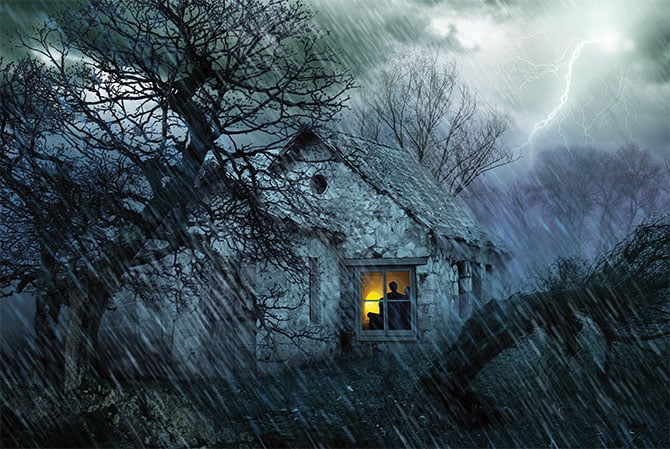
8. Describe the weather and its influence on the theme of the
story?
9. Does fate rule our lives or do we have some control over
what happens to us? Explain your viewpoint based on the
story The Monkey’s Paw

 Amazon.com: The Monkey's Paw : Stephen Lang, Charles S. Dutton, Brett  Simmons: Movies & TVThe Monkey's Paw - Reading Fluency | Scholastic Scope Magazine

Byzantium by W.B Yeats line by line explanation and analysis


 The poem 'Byzantium' is in fact an imaginary voyage into the celestial world. It is a companion piece to the 'Sailing to Byzantium'.

Poet depicts Byzantium as a place of purgatory or heaven.  The departed soul gets purified once it reaches in Byzantium. Hence the poem is highly philosophical and spiritual as it deals with the voyage of the spirits and its purification.
 
Byzantium was an ancient city in Rome also known as Constantinople, the capital of Roman empire now it is in Istanbul, Turkey. Byzantium is the city of excellence and perfection and the meeting point of East and West, well known for its artistic and architectural marvel.

As far as Yeats is concerned Byzantium is the conceptual creation of the poet. The poem is highly symbolic in nature as every other poems of W.B Yeats. 

As he walks through the streets of his own imagination some images fade away like the drunken soldiers and the prostitutes. The night walkers depart after the great cathedral gong. Still, human life is abounds in complexities,miseries and sorrows. Which infuriates the human vein.

Poet notices an image of man. But he soon realizes that it's a shadow. Still it confuses the poet and it was actually a figure in the shape of a human body. Later, poet finds a moving dead body from the Hades (land of the dead). Once it was a living thing with complexities and furies, now it became a purified soul. The mouth of the soul has no moisture and breath. Poet praises this superhuman figure and contemplates about life in death and death in life.

Poet believes in the notion of life after death as John Donne remarks in his Sonnet 'Death be not proud' that death is an entry into the eternal world and a royal road to  immortality. Human beings are in fact a thin lines between life and death.

Poet moves towards a miraculous golden Bird, a product of handicraft. The reference of this bird is conspicuous in the poem sailing to Byzantium. The bird was placed on the starlit golden bough. He remarks that this bird is immortal. This stanza definitely reminds the readers about a few lines from Ode to a nightingale "Thou wast not born for death, immortal Bird!". Yeats consider this artistic creation is like a purified soul. The bird sounds like a cock in Hades (cock in Hades is the prophet of rebirth). The golden bird sings about the immortality of the souls. The bird scorns about the ephemeral nature of life, including the ordinary birds or petals (everything that spoils) and all the complexities and dirt of humankind.
 
Forthcoming Stanza reflects the vast knowledge of W.B Yeats about Indian philosophy and Upanishads. 

Poet reaches at the castle of Byzantine Emperor (God). He can see flames at the pavements not fueled by any faggot or any piece of iron. Because the Emperor or the almighty itself made it. No storm can disturb these flames. Here the blood begotten spirits are purified of all their passions in the flames. Souls are dancing by forgetting everything. The dance of agony and purification progresses. Despite they feel pain they remain in a trance like state. Only the complexities and furies burn, the soul remains intact.

Poet envisions the sight of the sea beside the Emperor's castle. Numerous spirits are en route to the heaven, striding on the dolphins and reach at the shore. The golden smithies of the Emperor ( angels) put an end to the torture of earthly existence by giving salvation and a passage to Paradise. What happens here is all the souls are purified in the unusual flame and carried by Dolphins to heaven. As the dolphins moves through the sea by breaking the waves, there slightly forms an image of paradise.
 
Fire Buddha Photograph by Tim Gainey | Pixels

The Waste Land by T.S Eliot Summary and analysis


Epigraph:

“Nam Sibyllam quidem Cumis ego ipse oculis meis vidi
in ampulla pendere, et cum illi pueri dicerent: Σίβνλλα τί ϴέλεις; respondebat illa: άπο ϴανεΐν ϴέλω.” – From the Satyricon by Gaius Petronius


(I saw with my own eyes the Sibyl at Cumae hanging in a cage, and when the boys said to her: “Sibyl, what do you want?” she answered: “I want to die.”)


The Sibyl of Cumae was a prophetess in service to Apollo and a great beauty. Apollo wished to take her as his lover and offered her anything she desired. She asked to live for as many years as there were grains in a handful of dust. Apollo granted her wish, but still she refused to become his lover. In time, the sibyl came to regret her boon as she grew old but did not die. She lived for hundreds of years, each year becoming smaller and frailer, Apollo having given her long life but not eternal youth.


The Waste Land presents itself immediately as a difficult poem, blocking entrance with an epigraph in Latin and Greek followed by a dedication in Italian. The dedication to Pound, calls him “the better craftsman.” The epigram, from the Satyricon of Petronius, alludes to the Cumaean Sibyl, the seer who was granted a wish by Apollo and asked for immortality. She neglected to ask for eternal youth. Her immortality thus became a process of continual increased debilitation, and her wish became a longing to die. Her condition reflects the condition of the civilization Eliot leads the reader through in The Waste Land, a culture of living death.


The first line, “April is the cruellest month,” takes hold of the reader’s attention. It is a simple and a baffling assertion. It indicates an implicit or rather contradictory reference to the famous Chaucerian glorification of April with its sweet showers at the beginning of The Canterbury Tales.


“April is the cruellest month” the poet asserts because, he explains by an image, it breeds lilacs out of the dead land; it brings life. Poet’s  suggestion is  that it would be better to allow death to be final. But April undoes death by reinstating life. What then is there about life that should make it undesirable? The answer is that the process of revivification mixes memory and desire. It causes the past and the future to clash with each other. This juxtaposition has the effect of provoking longing. It stirs dull roots with spring rain. Paradoxically, “Winter kept us warm” because it covers “Earth in forgetful snow” and feeds “A little life with dried tubers.” It seems that winter is as close as one can get to death while still alive.


The first a few lines of the poem force to think about some actions “Breeding,” “mixing,” and “stirring,” all such processes are disturbing  for modern people.


The scene glides into Starnbergersee (a lake near Munich, west Germany).  The transition is smoothed by the continuing reference to the characteristics of the seasons.


"Summer surprised us, coming over the Starnbergersee

With a shower of rain; we stopped in the colonnade,

And went on in sunlight, into the Hofgarten,

And drank coffee, and talked for an hour."


These lines contain thoughts of Tiresias, the spokesman of the poem, who is a representative of the modern world. Tiresias and his girl friend Marie were travelling in Germany, when they were overtaken by summer They took shelter under the rows of the trees and thereafter walked in the sun-shine the Hof-garten, where they gossiped for an hour. says: "I am not Russian at all; I come Lithuania; I am a German." When Marie was a child, she stayed with her cousin, the Arch-duke. He took her out on a sledge and she was much frightened.


He asked her to hold the sledge tightly and they travelled down together They felt quite free when they wandered into the mountains. Now, she spends her time reading till late in the night. During winter, she goes to the south to enjoy her holidays.


Taken literally, this fragment of a conversation Eliot actually had with Countess Marie Larisch, niece of the Austro-Hungarian Dukes.  The assassination of archduke Franz Ferdinand leads to the sudden outbreak of first world war.

She becomes too nostalgic as we know nostalgia is a denial of painful present.


Eliot now presents another scene in The Waste Land of the modern civilization. The old civilization with its values and conventions is dead and gone, leaving only a heap of broken images. Nothing seems to grow out of its stony waste land. There is an old tree lying on the ground. It represents the good individual who once functioned like a shady tree and proved beneficial to others, but is no more. The barren land is full of crickets but their music gives no satisfaction. The stony wilderness is symbolic of the spiritual barrenness. An angelic voice tells the protagonist to stand under the great rock (the Christian church) which represents God's strength. The shadow of the rock is unchanging. It is an embodiment of eternity. The shadows of the mortals. however, keep changing. The shadow falls behind the man in his youth as his career opens out in front. But with the passage of time the shadow falls in front of him, in the evening of life. This shows that man is essentially a heap of dust. The fear of death keeps man under great tension. It is only pure love which rids man of fear. The godless man is always in the grip of fear. The poet gives an example of fear in love or the pangs of unrequitted love (one sided love). He refers to the story of Tristan who had a guilty passion for Isolde. This guilty love proved fatal. The song in the poem refers to Tristan, who mortally wounded, awaits the arrival of his beloved. He is punished by king Mark, to whom Isolde was to be married. Tristan inquires of the watchman if the ship is bringing his beloved. The reply of the watchman is negative: "Empty and desolate is the sea" sums up the despair and the grief of the guilty lover.

Frisch weht der Wind
Der Heimat zu,
Mein Irisch Kind
Wo weilest du?

 "The wind blows fresh
 To the Homeland
My Irish Girl
Where are you lingering?"
  ~Tristan und Isolde, i, verses 5-8


The poet then gives the story of the Hyacinth girl. This is the first experience of a young lover. The lover is terribly excited. Like the love of Tristan, the love of this young man is also a guilty love as he makes love to the girl secretly in the garden. This sort of love is not free from fear and anxiety. The feeling of the lover is summed up in the line: "I was neither living nor dead and I knew nothing." so love offers no joy or relaxation under the conditions of modern life. Eliot is essentially Puritan and he condemns the laxity in sexual relationship, so common in the modern age.

Oed’ und leer das Meer.

Empty and desolate is the sea. [V. Tristan und Isolde,] III, verse 24. By Richard Wagner

 The Waste Land: The Original 1922 Edition: Eliot, T. S.: 9781947844353:  Amazon.com: Books

Significance of the title The gift of the magi

 "The Gift of the Magi" narrates the story of a young couple who sacrificed their most valuable things in order to give each other the best Christmas present. As the title itself hints, there is a deep Christian mythical connection to this short story.  According to Christian tradition The Magi or the three Kings (they also addressed as three wise men in different Mythologies) invented the practice of giving presents on the occasion of Christmas. 

As Bible remarks , the magi were the trio of kings who traveled to Bethlehem from somewhere in the far distance of east (probably Persia) to deliver three presents to the baby Jesus. Their journey itself was an act of sacrifice as they faced several hardships. To travel long in those days was very much difficult.  Thus, they were ready to sacrifice their royal life.

According to the story, the magi were wise folks. The gifts the magi gave to Jesus must have been wise too. This same idea reflects in the short story "The Gift of the Magi" at the end.
 

O. Henry conveys the idea that, they were in fact wise because they had each sacrificed their most valuable possessions for the person they loved most . They were

like the three wise men — the Magi—who brought presents for Jesus Christ after he was born.  this is why Christians still give presents on the occasion of Christmas to remember the gifts the Magi brought to little Christ on that very first Christmas.


Major themes

Sacrifice
Della and Jim give up the most valuable possessions so they can buy Christmas gifts for each other. They proved that their bond is that much intense and unshakeable.  A gift shall be the most valuable thing when someone sacrifice their own precious thing.


The concept of Beauty
Della is worried that Jim won't think she is beautiful with short hair, but Jim loves her far more than just her beautiful hair and how she looks. The physical beauty doesn't contribute anything to their happy life. It's all about the union of soul. In fact Jim and Della share a single soul separated by two bodies.

Family bond
Jim and Della are husband and wife and they love and admire each other. Jim's watch was his ancestral possession and consider as a great pride for him. Still, he sacrifices it to express to indicate his depth of love so that he can make his family strong.

Wisdom
Della and Jim were wise because they were willing to make sacrifices to show their love for each other. Their decision was very much wise as far as the writer is concerned.

Love
Jim and Della are the epitome of love. Their love is very firm in the sense that nothing can shackle it like financial condition or the physical beauty. Economically they were poor but emotionally they are rich. Love made them rich and happy.

OHenry_Level_1