Search This Blog

To Posterity by Louis MacNeice line by line explanation and critical analysis

 "When books have all seized up like the books in graveyards"

At the outset of the poem speaker anticipates the future of the books and expresses his anxieties and concerns. He invites the readers’ attention into a situation where the books are completely out of work. It has stopped working in the sense; people no longer use it as they find pleasure in something else. Books lack its significance as the poet strikingly brings the imagery of graveyard. Being the land of the dead nothing remarkable happens in the graveyard. Similarly, the books are turned to be the lifeless objects hence it rests in the graveyard.


 "And reading and even speaking have been replaced
By other, less difficult, media"

The speaker talks about the contemporary situation (1957) when, the process of reading and even speaking have been replaced by easily accessible and highly sophisticated new media such as Radio and Television.  


" we wonder if you
Will find in flowers and fruit the same colour and taste
They held for us for whom they were framed in words"

The fragrance and colours of flowers and the delicious tastes of fruits framed in words which are contained in books have disappeared. There is no wonder in the fact that textual words can certainly evoke our senses and enlighten our visual sensibilities. The new media can never constitute such creative pursuits.


"And will your grass be green, your sky blue,"

Poet asks some rhetorical questions, as the main purpose of a rhetorical question is to create a dramatic effect rather than getting any answer. As far as Louise MacNeice is concerned books can effectively as well as creatively convey the real beauty and charm of the nature. Without books the vivid scenes of the nature can’t be properly exhibited.


"Or will your birds be always wingless birds?"

Books can provide lots of sparks which ignites the imagination of the readers. Birds without wings can’t fly or even unable to make a single movement similarly without books humans can’t be imaginative. Books should be the intimate companion for all as it can seriously damage the ignorance.


Critical analysis

A work of literature in general and poetry in particular reflects the truths of contemporary life or perhaps it can even predict the future course of action. As the title of the poem ‘To Posterity’ itself clears the idea that Louis MacNeice wants to communicate something serious to the future generation regarding the books.

The poem was composed in 1957, the time of digital revolution. Initially, the poet forecasts the agonizing reality associated to the future existence of books. He was more aware of the emerging new media as the digital revolution brought out some remarkable changes in the attitude of the general public. People consider books as an out dated object and eventually switched over to electronic media. The immense popularity of Televisions and Radios rapidly damaged the intimacy between human beings and books.

The speaker expresses his lamentation on this attitude of the generation and asserts the fact that the real beauty and splendour lie in the books not in electronic devices. Books can easily construct a visual sense and it ignites imagination. The vivid beauty of nature and strong feelings of humankind can only effectively communicated through books. Digital media can never be a substitute for this.

Finally, poet admits the fact that posterity will be quit far away from the books and compares them with wingless birds as they are highly mechanical and materials and they don’t have any sort of imaginative sensibility.


Question & Answers

The Rocking Horse Winner Question & Answers  

 The future of books is coming, but it's coming slowly | TechCrunch


To Posterity by Louis MacNeice

When books have all seized up like the books in graveyards
And reading and even speaking have been replaced
By other, less difficult, media, we wonder if you
Will find in flowers and fruit the same colour and taste
They held for us for whom they were framed in words,
And will your grass be green, your sky blue,
Or will your birds be always wingless birds?

The future of books is coming, but it's coming slowly | TechCrunch

The Mark of Vishnu by Khushwant Singh summary


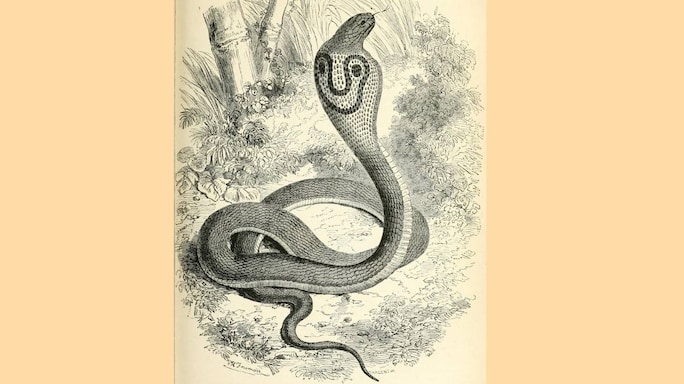
"This is for Kala Nag," said Gunga Ram, pouring the milk into the saucer. "Every night I leave it outside the hole near the wall and it’s gone by the morning." "Perhaps it is the cat,” we youngsters suggested.

"Cat!" said Gunga Ram with contempt. "No cat goes near that hole. Kala Nag lives there. As long as I give him milk, he will not bite anyone in this house. You can all go about with bare feet and play where you like."


The story begins with the old Brahmin Gunga Ram’s routine action of pouring milk into a saucer and placing it near the hole in which Kala Nag lives. Gunga Ram is convinced that the milk is drunk every night, a belief that is mocked by the young boys. The boys mocked at Gunga Ram’s superstitious belief by affirming a scientific fact that the snake does not drink milk.

"You’re a stupid old Brahmin," I said. "Don’t you know snakes don’t drink milk?


It was no use of arguing with Gunga Ram. He is like all good Hindus, believed in the Trinity of Brahma, Vishnu, and Shiva, the creator, preserver, and destroyer. Of these he was most devoted to Vishnu. Every morning he marks his forehead with a ‘V’ in sandalwood paste to honour the deity. Although a Brahmin, he was illiterate and full of superstition. To him, all

life was sacred, even if it was of a serpent or scorpion or even a  centipede.


Thus, he would never allow the young boys to beat such creatures. Many a time these creatures sting Gunga Ram but his faith remains resolute. This accounts for Gunga Ram’s deep regard for the snake, particularly the Cobra or the Kala Nag.


One day the boys threatened Gunga Ram to kill his Kala Nag, he resisted and stated that if they kill the Kala Nag it will not serve any purpose as the Nag had already laid a hundred of eggs that would soon become cobras. To tease Gunga Ram, the boys in return said that they would catch all the cobras alive and send to Bombay where they would be exploited for making antidote against the snake bite. In this manner Gunga Ram was often ridiculed by the boys for his blind and committed devotion towards snakes. Despite all these, he continued to feed and protect snakes.


It was monsoon time, when finally, the boys got to see the Kala Nag. Heavy rains had flooded Kala Nag’s hole forcing it to come out of it and sit in an open part of the lawn. The moment boys saw the Nag, they surrounded it with bamboo sticks in their hands, though the Nag tried its best to escape, but the boys managed to damage its back, leaving the head undamaged. The boys then kept it in a large biscuit tin securing it with string. All this while, Gunga Ram was away from home and had no clue as to what had happened to Kala Nag.


"Don’t damage the head," yelled one of us. "We’ll take Kala Nag to school."


The next morning as the school bus came and the students brought something in the tin to Gunga Ram shouting that the tin contained his Kala Nag.


"Here’s your Kala Nag. Safe in this box. We are going to put him in spirit."


Gunga Ram stood speechless and helpless. The boys presented the tin to the science teacher and their teacher appreciated them. As soon as the teacher untied the string around the tin, the lid flew into air and Kala Nag jumped at him. The teacher was frightened and the boys stood up on their desks and yelled hysterically. The Nag’s back had been broken by the boys, but it somehow dragged itself to the door of the classroom and sat at the threshold.


Outside the classroom stood Gunga Ram with a saucer and a jug of milk. As soon as he saw Kala Nag come up he went down on his knees. He poured the milk into the saucer and placed it near the threshold. With hands folded in prayer he bowed his head to the ground craving forgiveness. In desperate fury, the cobra hissed and spat and bit Gunga Ram all over the head—then with great effort dragged himself into a gutter.


 Gunga Ram groaned in agony, turned pale and blue and froth (foam) appeared on his mouth.

There were little drops of blood on his forehead which were wiped away by the teacher. Underneath was the V mark where the Kala Nag had dug its fangs.


The Mark Of Vishnu

The Eagle by Alfred Lord Tennyson


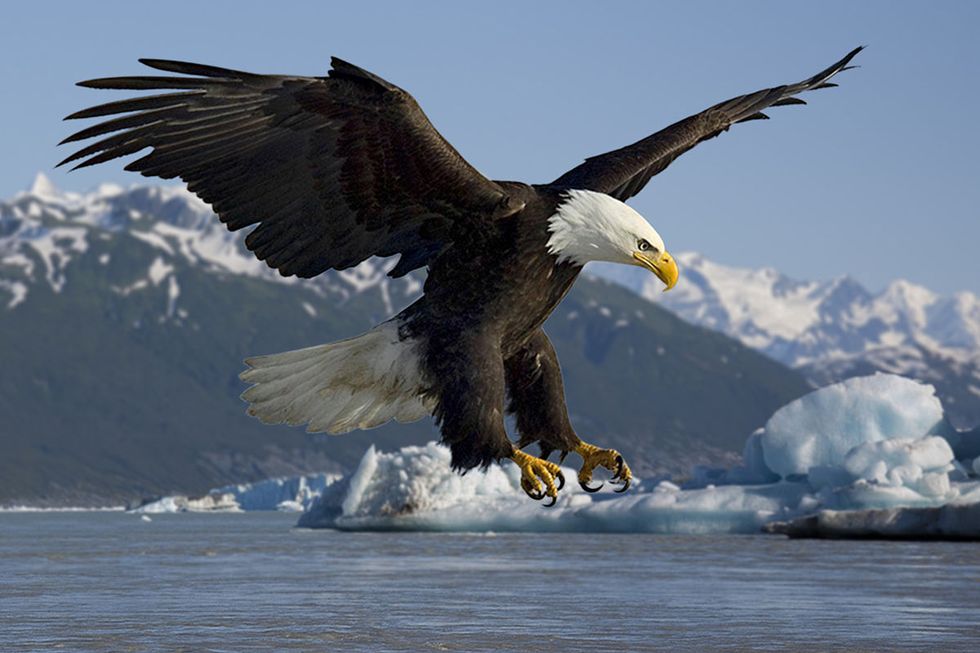
He clasps the crag with crooked hands;
Close to the sun in lonely lands,
Ring'd with the azure world, he stands.

The wrinkled sea beneath him crawls;
He watches from his mountain walls, 
And like a thunderbolt he falls.

 The Eagle Test


The Rocking-Horse Winner : Question answers ( Litmosphere)

 I. Answer the following in one or two sentences

1     1. What was the anxiety that they felt in the house?

Although they lived in a grand style, still they felt always an anxiety in the house that there was never enough money with them. The father and mother had a small income, but not nearly enough for the social position which they had to keep up.


2      2. What was the unspoken phrase that haunted the house?

The unspoken phrase that haunted the house was : “There must be more money! There must be more money!”. The children could hear it all the time, though nobody said it aloud. They heard it at Christmas, when the expensive and splendid toys filled the nursery.


3      3. What according to the mother causes to have money?

According to the mother ‘luck’ is the primary factor which causes to have money. She says : “ we are poor members of the family, because your father had no luck ”.


4     4. Why is it better to be born lucky than rich?

As far as the mother is concerned luck causes to have money. If somebody is lucky he/she has money. That is why it is better to be born lucky than rich. If somebody is rich they may lose their money. But, if he /she is lucky, they will always get more money.


5    5. What was Paul’s secret of all secrets?

Paul’s secret of all secrets was his wooden horse, which had no name. whenever he rides his rocking horse, it sometimes reveals the name of the horse which is going to win in the big races.

II. Answer the following in a paragraph.

1. How does Paul seek luck?

According to Hester it's luck that causes to have money. and she consider herself is the most unluckiest person as they are poor and her husband too had no luck. 

Hence, Paul wanted to prove that they have enough luck. Paul’s secret of all secrets was his wooden horse, which had no name. whenever he rides his rocking horse, it sometimes reveals the name of the horse which is going to win in the big races. he knew the hours could take him to where there was luck. This rocking horse remarkably made him winner several times.

2. Character sketch of Hester?

Hester is one of the most significant characters in the short story The rocking horse winner. She is the mother of Paul. though she is beautiful and married for love, she consider herself is unlucky and her love later turned to dust.

everybody else said of her that she is such a good mother and she adores her children. Although they lived in a fairly good style, they felt always an anxiety in the house that there was never enough money. She makes a great effort and tried different things to improve their way of life, but could not find anything successful.   

3. "My family has been a gambling family, and you won't know till you grow up how much damage it has done". Explain this statement?

Hester can never support gambling, as it had done irrecoverable damage to their family. Paul wanted to prove that they have enough luck. The only possible way is horse betting or gambling. Paul keeps everything as secret, he even seeks the help and support of their family lawyer in order to give the money that Paul earned through gambling. 

"My family has been a gambling family, and you won't know till you grow up how much damage it has done" this statement clearly marks that why she prohibits gambling. As it had destroyed her family once.

4. Paul's final bet?

As Derby race approaches, Paul grows more tense and his mother becomes anxious about him. Two nights before the Derby, she is at a big party in town and becomes overwhelmed with worry about Paul.

Paul's mother and father return from the party at about 2 a.m. Again caught with extreme anxiety, Paul's mother goes upstairs to check on Paul. She listens outside his door and hears a strange heavy noise that goes on and on. She can't identify the sound. She opens the door, switches on the light, and is frozen in fear and anxiety at the sight. Paul, in his green pajamas, is rocking wildly on his horse. When she cries out to him, he screams, "It's Malabar!" and then falls from the horse. Paul's mother rushes to hold him.

For three days Paul suffers from a brain fever and his mother stays by his side, heartbroken. Paul's mother asks everyone what Paul means by "Malabar." Uncle Oscar says it is the name of a horse running for the Derby, and then he speaks to Bassett and places a bet on Malabar.

On the evening of the third day, Paul dies. Bassett asks to speak to Paul. He whispers to Paul that Malabar won and Paul won over £80,000. Paul tells his mother about his rocking horse and how lucky he is. He dies that night. Uncle Oscar comforts his mother by telling him that she is now much richer.

4. Supernatural element in '' The Rocking Horse Winner''?

D.H Lawrence is the most celebrated modern writer and his craftsmanship reflects in the short story The Rocking Horse Winner. He significantly uses the supernatural elements such as the murmuring house and the rocking horse. 

When Hester in general and Paul in particular conscious about their financial state, their house seems to whisper the phrase "There must be more money!,There must be more money!

Then, as the title itself remarks. the wooden rocking horse has the magical power as after every ride it can predict the name of the horse racing winner. it's again quite supernatural that a wooden horse easily reveals the name of the winner.

5. Symbolism in ''The Rocking Horse Winner''?

  Through the short story The Rocking Horse Winner D.H Lawrence shows the nature and life style of a modern middle class family. this family is highly materialistic as their main aim is making money and becoming rich.

The whispering house is a powerful symbol as it expresses the general mindset of the characters like Hester and Paul. their house seems to whisper the phrase "There must be more money!,There must be more money!" which reflect the mind of the characters. thus, D.H Lawrence  used surrealism in the short story, it is the manner of representing the unconscious mind of the charters in a distorted way.

Yet, another powerful symbol is the Rocking horse, it acts as the greatest secret as well as the mystery. It symbolizes Paul's luck and fortune. in the final part of the story the same horse leads to the death of Paul.


   THE ROCKING HORSE WINNER 1949 British Cinema Classic Australian daybill -  Moviemem Original Movie Posters