Search This Blog

Buchi Emecheta


Buchi Emecheta was born in Nigeria's capital, Lagos, but her parents were from the smaller town of Ibuza, and an awareness of the differences between city life and traditional village life is reflected in many of her novels, particularly those set in Nigeria. The Joys of Motherhood (1979), for example, one of her most celebrated novels, tells the story of Nnu Ego, who marries and moves to the city with her new husband, makes countless sacrifices for her children and yet dies alone. The  novel depicts the shock suffered by the generation which bore the brunt of the transition to a more modern lifestyle, trapped in old beliefs but surrounded by a changing  society.


The Slave Girl (1977), which won Emecheta an award for Best Black Writer in the World, also deals with the contrast between village and city life, and the effects of colonialism, with Christianity playing a major role in what is basically a fictionalisation of the life of Emecheta's grandmother. The story of Ojebeta, the slave girl, is an extreme example of the lives of women in a patriarchal society. while also standing for the slavery of a whole  continent under colonial rule. Ojebeta's parents die in an influenza epidemic, the seven-year-old girl is sold by her brother to a distant relative. Her slavery, Emecheta makes clear, is a version of the domestic slavery to which even free women are subjected. The novel is a witty and provocative presentation of the interaction between four different levels of slavery, colonial, religious, indigenous African and the domestic slavery of marriage.


In her depiction of village life in a choral style Emecheta's work resembles that of Chinua Achebe, but unlike Achebe she concentrates on the experiences of women. This places her, despite her protestations, in the feminist/womanist tradition alongside writers such as Ama Ata Aidoo and Angela Carter. She could also be associated with a number: of migrant writers who have written about London, including Jean Rhys and Sam Selvon.

 
Emecheta attended several schools in Lagos, and in her autobiography, Head Above Water (1986), records being introduced to writers such as Jane Austen, Lord Byron and Charles Dickens. The list of her literary influences, however, would not be complete without including the strong influence of an oral tradition, which can be seen in her deceptively simple prose-style, and in the cumulative effect of her novels as a whole. When taken together, the novels work as a complex series of tales that offer individual perspectives, while at the same time including the reader in the history of an imaginary people. This overall integrity arises from the fact that many of the novels are auto bio- graphically based, and therefore deal with similar concerns.


The autobiographical novels In the Ditch (1972) and Second-Class Citizen (1974) fictionalise Emecheta's arrival in Britain, her struggles against prejudice and an abusive husband, separation from him, and the attempt to rebuild a life while living in a council estate. She married at 16, and had five children with in the next six years. In 1962 she joined her husband in London but separated from him four years later. One of the factors which made her leave her husband was his burning of the manuscript of her first novel, an earlier, more idealised version of a couple's life that would later become The Bride Price (1976). At the age of 22 she had to fend for herself and her five children while studying and writing In the Ditch, her first published novel, which dissects the harsh life of single mothers living on benefit in a state of virtual classlessness.

The depiction of difficulties faced by immigrants is also a theme of Gwendolen (1989, published as The Family in the USA) and Kehinde (1994). Kehinde is particularly well crafted. The narrative follows the eponymous character's struggle to come to terms with her husband's desertion and his return to Nigeria, first by following him and becoming entangled in extended family politics, which include her husband's second wife and his sisters, and finally by returning to England. Like many immigrants, Kehinde and her husband believe that returning to Nigeria will be akin to going back to a paradisiacal place where they can be happy ever after. This dream of a welcoming homeland is exploded in the novel, a theme which resonates with the notion of 'imaginary homelands' put forward by Salman Rushdie.


The illusion of the homeland' is further explored in The New Tribe (2000), the first of her novels to feature a male protagonist; Chester is abandoned at birth and brought up by Reverend Arlington and his wife. His feelings of alienation result in a fruitless quest for an imaginary African kingdom of which he is the rightful prince. The ‘tribe’ he is looking for, however, is not to be found in his origins, but in a future multicultural society, which is perhaps the new tribe to which the title alludes.

 
Emecheta's heroines experience conflicts while trying to build an identity across different cultural discourses. The conflicts are based on those experienced by Emecheta herself, such as cultural estrangement arising from postcoloniality, race, gender and class issues, and migration to Englami. Readers often feel unnerved by her work because of its seemingly self-contradictory nature.


Emecheta has been careful not to fall into the trap of the immigrant who looks at her country's affairs from a distance, and she can be seen as a new kind of syncretic (combination of different forms of belief), postcolonial writer, whose identity refuses to be resolved in favour of either of its elements, the ‘African’ or the ‘Western’.

 A Sort-of Career: Remembering Buchi Emecheta

T.S Eliot


Thomas Stearns Eliot, winner of the 1948 Nobel Prize for Literature, was one of the most influential literary figures of the early twentieth century. The period was a melting pot for literary innovations and revolutions, with many of the century's most important writers, such as W. B. Yeats, James Joyce, Virginia Woolf and D. H. Lawrence, making an impact, but Eliot holds a special place for the comprehensiveness of his vision and complexity of his outlook.


At Harvard he was influenced by the philosopher George Santayana, and the critic Irving Babbitt, the latter being responsible for Eliot's anti-Romantic attitude, a stance reinforced by the writings of F. H. Bradley and T. E. Hulme.


His travels and studies interrupted by the First World War, Eliot moved to England in 1915. He spent time in Paris, but never returned to Harvard to complete his PhD. He taught himself Buddhism and Sanskrit, and studied under George Ivanovitch Gurdjieff, who established "The Institute for the Harmonious Development of Man', first in Russia and later in France.


Eliot became acquainted with Ezra Pound, who encouraged him to write, the result being ‘The Love Song of J. Alfred Prufrock’, which was published in the Chicago magazine Poetry in 1915. Prufrock, the perfect gentleman, is tormented by the meaningless gentility, conventionality and socialising by which he is surrounded, and by his inability to express his anguish. Uncertain of his own identity, he feels he has heard something other, but is unable to respond. The fragmented form of the poem reflects his fragmented and anxious state of mind. From a technical point of view the poem was revolutionary, and the extraordinary imagery, such as a quiet evening being likened to a patient etherised on a table, was shocking, but caught the public's attention. Pound introduced Eliot to Harriet Weaver, who published Prufrock and Other Observations in 1917: an event which could be taken as the beginning of the Modernist revolution in poetry.


In 1915 Eliot married the ballet-dancer Vivienne Haigh-Wood, but the marriage was not a success. His wife was much more vivacious than he was and very temperamental. She suffered from mood swings and was eventually diagnosed as hysterical and confined to a mental institution.


In 1919 Aru Vos Prec (entitled Poems in the United States) was published, containing the poem Gerontion, a contemplative interior monologue in blank verse - another revolution in itself. In the same year Eliot published the influential essay Tradition and the Individual Talent, in which he presented the doctrine of impersonality in poetry. This was followed by the collections of essays, The Sacred Wood (1920). The Use of Poetry and the Use of Criticism (1933) and The Classics and the Man of Letters (1942). In Hamlet and His Problems" in The Sacred Wood, he further developed his theory of impersonality, and coined the term 'objective correlative. In The Metaphysical Poets and Andrew Marvell, published in Selected Essays, (1932) he re-assessed the seventeenth-century Metaphysical poets, praising the intricate harmony of intellect and passion found in their work. He also used the famous phrase "dissociation of sensibility". which, like many of the ideas expressed in his criticism, seems to suggest an approach helpful in the appreciation of his own poetry. These influential writings changed the face of literary criticism.


From 1917 to 1919 Eliot was assistant editor of The Egoist and in 1922 he founded Criterion, a quarterly review which closed only with the beginning of the Second World War. Three years later he joined the publishing house Faber and Gwyer, which later became Faber and Faber.


In 1922 Eliot suffered a breakdown, and during his stay at a sanatorium in Lausanne he composed The Waste Land' (1922). The poem attracted adverse reactions from conservative quarters, and praise from younger poets. Among the critics were E. E. Cummings, who regarded Eliot as arrogant and pedantic, and Stephen Spender, who commented that there was a ‘certain cultivated heartlessness’ about the poem. Nevertheless, the poem became a symbol of the disillusionment of the post-First World War generation, and Eliot's conversational style made him an icon, a model for generations of poets to come.


With Pound's guidance Eliot abridged 'The Waste Land' to about half its original L length, and divided it into five parts, each consisting of a series of dramatic monologues. It is a carefully crafted chorus of voices, with delicately mingled cultural and historical references. Material was drawn from sources such as the Grail legend, the story of the Fisher King, Frazer's Golden Bough, and Dante's Divine Comedy, and the final words  are in Sanskrit. This reliance on allusion to cosmopolitan mythology, and the liberal use of foreign words, were the aspects most strongly criticised. These elements can alienate the reader, but one's focus should be on the poem's presentation of the predicament of man searching for salvation, rather than on the scholarly references. Eliot had already shown himself to be a fine craftsman, and in this poem he proved himself to be a metrical magician. The five sections are structured on a system of fragmented discontinuity, reflecting the discordant experience of modern secular man. Eliot himself said in Tradition and the Individual Talent that he was striving to attack the very concept of the unity of soul.


Eliot published three short prose works reflecting his interest in socio-theology: Thoughts After Lambeth (1931), The Idea of a Christian Society (1939) and Notes Towards the Definition of Culture (1948). He converted to Anglicanism in 1927, as well as adopting British citizenship.


During this period Eliot published poems such as The Hollow Men, Ash-Wednesday and Four Quartets, all of them ripe with problems of allusion and linguistics. Ash Wednesday is particularly interesting as it was the first long poem written after his conversion. This poem addresses religion in a way that no other poem had previously, expressing the pain of accepting religion at the cost of one's disbelief. The poem was not well received, its apparently secular outlook being interpreted as an expression of disillusionment.

Fur Quartets led to Eliot being awarded the Nobel Prize, and Eliot himself regarded it as his masterpiece. The four poems, Burnt Norton (1936), East Coker (1940), The Dry Salvages (1942) and Little Gidding (1942) are carefully crafted, starting from geography and leading into the exploration of such themes as theology, history and humanity. The four were written separately, but when brought together assumed a harmonious structure, being united by the theme of the past. This work was universally accepted, even those who were not in sympathy with the Christian message being impressed by the thematic and technical mastery.

 
Eliot's religious searching and slowly emerging convictions found expression in his plays, from Sweeney Agonistes to The Elder Statesman. He wrote his plays in blank verse in an attempt to reintroduce verse drama to the stage, but not all of them can be ranked with his best poetry.


Murder in the Cathedral (1935) is perhaps the most significant, dealing with a deeply religious experience which is attained through doubt and temptation. Influenced by the seventeenth-century preacher Lancelot Andrews, it is based on the death of St Thomas Becket. The play resulted in Eliot being appointed to the committee in charge of a new English translation of the Bible. The Family Reunion (1939), in which Eliot used dialogue closer to natural speech, did not win the popularity of Murder in the Cathedral, the audience finding it difficult to accept the classical story of Orestes adapted to a modern domestic setting and given a heavy dose of psychological realism.


Eliot's fame has not been without blemish; he has been accused of racism, and of supporting Fascism. One particular poem, ‘Burbank with a Baedeker: Bleistan with a Cigar’, has been the focus of controversy as it contains a suggestion of anti-Semitism, a suggestion which will permanently tarnish his image. 


T.S. Eliot Poems That are So Memorable to Poem Lovers

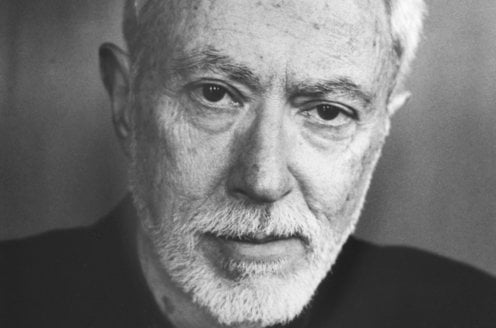
J.M Coetzee


John Michael Coetzee, winner of the 2003 Nobel Prize for literature, was also the first author to win the Booker Prize twice: in 1983 for Life and Times of Michael K. and in 1999 for Disgrace. Both novels, although very different, show Coetzee's interest in exploring the common ground between the personal and the political, and the devastating effects the bigger social picture can have on individual lives.


Coetzee is a South African author, English is not his first language (although it was his mother's language) In this respect he has something in common with the British author of Polish origin Joseph Conrad, and the American author of Russian origin, Vladimir Nabokov. Like them, he became a master of style in an acquired language. His decision to write in English rather than Afrikaans came partly through education, and partly through his awareness that English, with its rich literary history and wide usage, opens doors to thematic inter-culturalism.


Coetzee's novels frequently establish dialogues with various historical ages and territories. In Waiting for the Barbarians (1980), the imaginary setting and time, filtering reality through allegory, clearly allude to the racist South Africa of which he has first-hand experience, and which is the main focus of his writing. Similarly, although the setting of Life and Times of Michael K. (1983) is unspecified, the novel tells the story of a group of characters living at the time of the fall of the apartheid regime. For the young gardener Michael K., who takes his mother back home through a country devastated by war, her death on the journey is a more overwhelming tragedy than the brutal macrocosm in which he lives could ever be.


Coetzee's novels are replete with complex intertextual allusions, and an omnipresent metafictional commentary which won't let us forget that he is also a professor of literature. In Foe (1987) and The Master of Petersburg (1994), he establishes stylistic dialogues with Defoe and Dostoevsky, his favourite authors, on whose work he draws heavily. Historical allusion is used on the level of form as well as content, as Coetzee reads the contemporary human condition through postmodern stylistic pastiche.


 Disgrace, Coetzee's most famous novel, and the most powerful on apartheid, dispenses with the refined erudition of earlier novels and presents difficult issues, such as cross-racial and intra-racial relations through the personal experience of the characters. The blurred distinction between the conflicts to which such issues give rise reinforces the awareness that there is no way to exclude historical and political forces from the private lives of individuals.


In Disgrace, before facing the shock of his daughter Lucy's rape by three black men. Professor David Lurie has himself committed a comparable moral transgression. The action which triggers his dismissal from the Cape Town Technical University, his affair with a student, makes him guilty not only of a loss of a sense of reality, an attempt to conflate real life and the work of Romantic poets which he teaches and writes about, but also of taking advantage of his privileged position as a professor.


Having lost his university job, Lurie finds refuge with his daughter, at her farm in Salem, Eastern Cape. In this forsaken place he discovers new meanings to existence, as he contemplates the similarities between human destiny and that of the dogs which, at the vet clinic. Lucy's best friend Bev Shaw puts to sleep when they can no longer be saved.


Coetzee's intention in Disgrace was not to write a political manifesto, but to portray a real life experience which, even if atypical, presents an optimistic view of the future of a country long divided by conflict. It can be read as an alternative way to express the damage done, by prejudice, to people's lives. Happiness may come from the satisfaction of being able to put an end to suffering, as Bev Shaw does for the dogs. But apart from death, Coetzee seems to say, there are few absolute truths.


Elizabeth Costello (2004) seems to mark a return to the intellectual sophistication of Coetzee's earlier work, and a setting aside of his commitment to the South African arena. With its biographical and philosophical over tones the novel challenges its own status as a novel, by breaking through the boundaries of the genre with bursts of complex intellectual discourse. There are many similarities between the heroine and her author: a reluctance to accept literary celebrity and its world of false self-appraisal, and a fear of prejudice, of fixed beliefs that will not lend themselves to change. A plea for thinking and open-mindedness, this novel is ultimately, faithful to Coetzee's overriding philosophy that prejudice is the most serious danger humanity has to face.


J. M. Coetzee – Biographical - NobelPrize.org

Peter Carey


Peter Carey is one of the few authors to have won the Booker Prize twice, having won it in 1988 for Oscar and Lucinda, and in 2001 for True History of the Kelly Gang. These two novels, being set in the nineteenth century, illustrate Carey's interest in the historical novel form, which he refashions through his postmodern sensibility, bringing to it an awareness of an irredeemably lost innocence.


 Carey was born in Bacchus Marsh, Victoria, Australia. In the late 1960s he travelled through Europe and the Middle East, and worked in advertising in London. He returned to Australia in 1970, to work in advertising in Melbourne and Sydney while writing most of the stories published in the volumes The Fat Man in History (1974) and War Crimes (1979). His first published novel was Bliss (1981), which is based on a theme of  'hippies versus capitalism', questioning given ideas of normality through a mixture of realism and fantasy.


Bliss was followed by Illywhacker (1985), a postmodern retelling of his grandfather's experiences delivering the first mail around Australia. The book's title comes from an Australian colloquialism for con artist, and its main topic is lying, as announced from the very beginning by Herbert Badgery, the 139 year-old 'Illywhacker'. The novel shows the history of twentieth-century Australia, but, in the true spirit of postmodernist playful treatment of reality', the history is presented through a rich interplay of truth and lies. with the narrator himself even questioning the truth of his own stories.


Carey has lived in various parts of Australia, including Bellingen, which made a strong impact on him, and provided some of the inspiration for Oscar and Lucinda, a mock Victorian historical novel, set mainly in nineteenth-century Australia. It combines a lucid critique of bigotry with the beautiful (but impossible) love story of Oscar Hopkins and Lucinda Leplastrier. After quarrelling with his father over their different religious views, the young Anglican reverend Oscar - who believes the ultimate proof of God's existence has been revealed to him through gambling is driven by his vice to Australia. On the ship he meets Lucinda, an orphaned heiress and an obsessive gambler herself. She owns a glass factory, and their community of thought and feeling - not very obvious otherwise finds a metaphorical projection in the glass cathedral they build together Lucinda bets her inheritance that Oscar can not deliver his church to his remote missionary post. Oscar's foolish attempt to transport the church down the river Bellingen fails. and the church sinks.


The novel is informed by a postmodern outlook, which encompasses the awareness of the world's fragmentariness, chaos theory, and the French philosopher Blaise Pascal's idea that faith is a form of gambling. This idea faithfully mirrors Carey's attitude to fiction writing in general as Bruce Woodcock observes, 'If faith was a gamble for Pascal, writing seems to be an incessant gamble for Peter Carey, which is perhaps why he is such a constantly exciting writer. Carey's work remarkable for its fluidity of shape, focus and theme, has an element of risk-taking about it. While interested in revisiting traditional forms, he constantly takes risks by turning them on their heads and filling them up with contemporary content. This ever-present questioning attitude, combined with an awareness of the human condition, has earned him a wide readership. Oscar and Lucinda was filmed in 1997 by Gillian Armstrong and starred Ralph Fiennes and Cate Blanchett.


In the late 1980s Carey took up residence in New York City, where he completed much of The Tax Inspector (1991) and wrote The Unusual Life of Tristan Smith (1994) and Jack Maggs (1997), Jack Maggs somewhat prefigures True History of the Kelly Gang in that it is also a convict story, indulging in the delights of Victorian melodrama blended with a pervading sense of history and elements of the Australian tradition of convict literature. The novel stages an engaging story of identity reinvention Maggs reminding the reader of Magwitch from Dickens's Great Expectations - against the background of the guilt-haunted past of colonial England.


True History of the Kelly Gang (2001) presents a colourful portrait of the famous Irish Australian outlaw and martyr Ned Kelly, who was hanged for murder, but transformed by legend into one of the big names of Australian nationalism. Receiving the award, Carey said that he was indebted to his wife, and to Ian McEwan, one of the rival nominees, promising to buy him an expensive meal. In the novel Carey adopts the language of late nineteenth-century rural Australians, using among his sources the outlaw's one surviving letter. Carey takes the reader from Ned's childhood, through his teenage years in and out of prison, his horse thefts and bank hold-ups, and finally to his years as a leader of a rebel band of farmers, fighting against a corrupt system.


In 2001 Carey published A Wildly Distorted Account, a travel book of his 30-day visit to Sydney. My Life as a Fake (2003) was inspired by Australia's most famous literary hoax, the 'Ern Malley Scandal' of 1944, in which a literary editor was persuaded to publish a collection of fake 'Modernist poems which two anti-modernist poets had put together in a few hours and offered under the pseudonym Ern Malley.


Like Ned Kelly, Carey is a declared anti conventionalist: not only did he abandon university studies, but years later, having won the Commonwealth Writers Prize for Jack Maggs in 1998, he became famous in the British press for refusing to meet the queen on the occasion.


Peter Carey: making it up as he goes along | Peter Carey | The Guardian

Martin Amis


Martin Louis Amis, who has been one of the most prominent English Writers since the 1970s, is the son of Sir Kingsley Amis. His step-mother was a novelist Elizabeth Jane Howard. In 1983 he was listed as one of the "Best Young British Novelists' by Granta magazine, along with fellow authors such as Julian Barnes, Ian McEwan and Salman Rushdie. 


Amis’s writing is notable for its dark humour and surprising moral undercurrents, and a recurring, but not exclusive, interest in metropolitan life in contemporary England. In the context of London settings, Amis explores the darker aspects of English society, in particular the violence implicit in some areas of youth culture, and the cruelty arising from envy between friends and between different classes. 


His first novel, ‘The Rachel Papers’ (1973), a story of adolescence, won the Somerset Maugham award in 1974 and was filmed in 1989. His second novel, ‘Dead Babies’ (1975), about a group of young people indulging in sex and drugs over a weekend, as also filmed, in 2001.


‘Success’ (1978), and ‘Other People: A Mystery Story’ (1981), were quickly followed by one of his best-known novels, ‘Money: A Suicide Note’ (1984), which satirises the amoral value system of Britain in the 1980s under Margaret Thatcher. There is a postmodern element in all of Amis s fiction, and Money includes an appearance by the author in a self-reflexive excursion into metafiction. This twist is advanced by the name of the first- person narrator, John Self - adding a dimension of self-parody. But Self, a typical Amisean antihero, should not be taken entirely as a self-portrait. In ‘Experience’ (2000) Amis comments:

“It would be a ferocious slander of Martin Amis (who was, incidentally, a minor character in this book) if I called Money autobiographical. It certainly wasn't higher autobiography. But I see now that the story turned on my own preoccupations: it is about tiring of being single; and it is about the fear that childlessness will condemn you to childishness.”


In 1987 Amis published a volume of short stories, Einstein's Monsters, which considers the dangers of the nuclear age, and the sense  of impending apocalypse was continued in his next novel, ‘London Fields’ (1989), which, like much of his fiction, was set in contemporary London.


‘Time's Arrow: or Nature of the offence’ (1991) is the only one of Amis s novels to date that has been Short-listed tor the Booker Prize. The novel is narrated by what appears to be the soul of a man who is initially called ‘Tod Friendly', although as the novel progresses it is revealed that Tod is a pseudonym. Tod's life story is told backwards, from death to birth, and the reader eventually learns that he had been a doctor at Auschwitz. Amis Said that he inverted time, by beginning at the end, ‘because Auschwitz is a psychotically  inverted world and one of the bedrocks of Nazism was the complete inversion of the doctor's role.’


‘The Information’ (1995) is based on the differing fortunes of, and rivalry between, two male friends who are both novelists. As a novel about novel- writing, it self-consciously exploits the technique of metafiction. It also mocks the publishing and writing industry, and humorously sabotages the possibility of friendship between authors.


‘Night Train’ (1997) marks a departure in style, being a pastiche of American detective fiction. ‘Yellow Dog’ (2003) is set in England and the United States and is typical of Amis's work in its sharp humour, its interest in class difference and privilege, and its focus on criminal behaviour.


In 2002 Amis published his autobiography, ‘Experience’, which won the James Tait Black Memorial Prize for biography. Other non-fiction works include ‘Koba the Dread: Laughter and the Twenty Million’ (2002), which analyses the effects of Stalin's power, and also examines his father's attitudes towards Communism. 


Quote by Martin Amis: “Cities at night, I feel, contain men who cry in...”