Search This Blog

Methods of writing

 or The process of writing


1. Pre-writing

Pre-writing activities are the preliminary steps before starting to write your essay.

 Understanding the question/topic, purpose and audience.

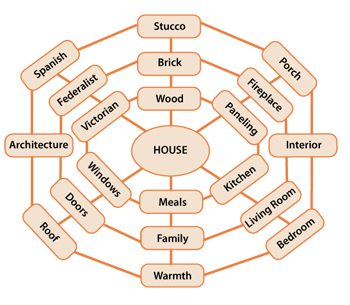
 Use pre- writing techniques like brainstorming, clustering/mind-mapping to list and organize your ideas.

 If your instructor has given you a question convert the question into a topic. If the topicis given by the instructor convert the topic into a question. If only a key word is given, you are required to frame topic as well as the question.

 Identify the sources and gather relevant materials.

 Prepare an outline; decide the logical ordering of ideas/cluster ideas for paragraphs.

 Identify the thesis statement.

2. Writing

 Frame the thesis statement and list the main points.

 Draft the introductory paragraph.

 Draft each body paragraphs with supporting points, substitution and transition.

 Drafts the concluding paragraph.

3. Revising / re-writing

 Edit and revise your essay: check for inconsistencies, tone, use of taboo words and expressions, grammar, spelling, punctuation and referencing.

Some difficulties in learning English vocabulary


Learning English becomes a difficult task for those who are using it as a second language. Mastering this language is in fact a challenging task due to its complexity, sophistication and immense word count. Following are some challenges in learning English vocabulary.


Homonyms

Homonyms are words that sound the same or are spelled the same but have different meanings in different context. It can be further classified into two.


Homophones:

Homophones are words that sound the same but have different meanings and often different spellings. Here are some examples:

Sea , see

Site, cite, sight

Week, weak

Stationary,  stationery


 Homographs

 These are homonyms that are spelled the same but have different meanings. For example, lead (to guide) and lead (a metal)

Orange - color and fruit

Band- can be arm band and band of soldiers

Bark- dog's sound and the outer portion of a tree


Idiomatic expressions

Idioms are group of words in a fixed order which have a meaning that cannot be guessed by knowing the meaning of the individual word. The proper use of idioms adds beauty and charm to one’s language. It is commonly use in (in) formal, spoken and written forms of language.


Some commonly used idioms in English

 A bone of contention -  

 A subject which causes disagreements and arguments


  A shoulder to cry on-  

 A person who gives you sympathy


 Braking up the wrong tree -  

 To make the wrong   choice or ask the wrong person


Pour your heart to somebody-   

 To tell somebody all your problems or feelings


 Rack your brain(s) - 

 To think very hard or for a   long time about something


 Run out of steam-  

Lose your energy and enthusiasm


 Stick to your guns-  

To refuse to change your mind   about something even when other people   are trying to persuade


 To tie the knot-  Get married


 Wreak havoc on (somebody) -

Cause a lot of damage


* Rocket science - Something very difficult to understand


*Beat around the bush- 

Avoid saying what you mean, usually because it is uncomfortable.


*Hit the sack - Go to sleep

*It's raining cats and dogs- It's raining hard

*Once in a blue moon – Rarely


*A storm in a teacup - A big fuss about a small problem

* Burn bridges - Destroy relationships

* ‘A piece of cake’– something is very easy.


Hyponyms

Hyponyms are words that belong to a specific category or subset of a broader, more general category . In other words, hyponyms are specific instances or types within a larger category. Here are some examples:


Fruit

Apple, Banana, Orange (Hyponyms): These are specific types of fruits.

Color

Red, Blue, Green (Hyponyms): These are specific colors within the category of colors.

Vehicle

Car, Bicycle, Motorcycle (Hyponyms): These are different types of vehicles.

Animal

Cat, Dog, Elephant (Hyponyms): These are specific animals within the broader category of animals.


Furniture

Chair, Table, Sofa (Hyponyms): These are examples of furniture items.


Collocation

 Collocations are conventional word combinations occur in unpredictable ways which are used in a language. Strong is a word which is often used with tea, but it is not usually used with rain. We often use the phrase strong tea, but we do not say strong rain. Instead we say “heavy rain”. Such combinations in a language are known as collocations. 


some commonly used collocations are as follows


 to know more about collocations


Antonyms and synonyms

Explain the Levels of meaning


Levels of meaning refer to the different layers or depths of interpretation and understanding that can be associated with a text. These levels help us explore the various dimensions and complexities of meaning within a given context. Here are some common levels of meaning:


Literal

The literal level of meaning refers to the straightforward and factual interpretation of words, phrases, or sentences without any deeper symbolism or metaphorical elements.

That information may be facts and details, sequences of events, cause and effects.  In this context reader doesn't have to dig deeper for the meaning.

It is the surface or primary meaning of a text. Here are some examples:


Example: "The sky is blue." Literal Meaning: The statement refers to the color of the sky, which is typically blue during the day.


The book is on the table." Literal Meaning: The book is physically located on top of a table.


Literal level of meaning has some limitations especially in the case of idioms and certain phraseologies.

Example

It's raining cats and dogs means  Heavy rain is falling from the sky. This is an idiom and doesn't actually involve animals falling from the sky. It means that it's raining very heavily.


Interpretive

To read at the interpretive level in fact is to read ' between the lines'. An in depth reading for all the inner or hidden meanings of a text can generate. 


It refers to the understanding the significance of something that is not explicitly stated but requires interpretation or analysis. It often applies to literature, art, symbols and dreams.


Here are some examples:


Literature: In a poem about a storm or dark night, the literal meaning might describe bad weather, but the interpretive meaning could be a symbol of inner turmoil or chaos in the poet's life.

Symbols: The American flag is not just a piece of cloth but carries interpretive meaning, symbolizing freedom, democracy, and national unity.

Dreams: The elements in a dream often have interpretive meanings. For example, a dream about flying might symbolize a desire for freedom or escaping a challenging situation.


Interpretive meaning varies from person to person and can be influenced by cultural, personal, and contextual factors.


Critical

Critical reading is the process of analyzing and evaluating a text to understand its deeper meanings, assumptions, and implications. It involves active engagement with the material, rather than passive consumption. Critical reading requires making judgements with regard to the text. The reader may judge the accuracy of facts, the validity of the main points and effectiveness of authors structure and style of communication.

Here are some key aspects of critical reading with examples:


Questioning Assumptions: Critical readers question the underlying assumptions in a text.


Analyzing Evidence: Critical readers assess the quality and relevance of evidence presented in a text. In a research paper, you might examine the sources and data used to support the author's claims.


Comparing Multiple Sources: Critical readers seek diverse perspectives and compare different sources on the same topic to gain a more comprehensive understanding. For instance, when researching a historical event, you might compare accounts from different historians.


Evaluating the Author's Credibility: Assess the author's expertise and credibility. If you're reading a scientific article, check the author's qualifications and the reputation of the journal in which it's published.


Creative

Creative reading calls for the creation of new ideas, insights,  applications and approaches.  It requires invention, prediction and use of the Imagination.  Proposing an alternative conclusion and suggesting or contributing more examples are examples for creative reading.

Explain schemata


Schemata is an effective strategy used by good readers.  Good readers in fact interact with the text; they have their own personal expectations. They create meaning by constructing or generating relationships between what they read and what they already know.

Hence, a prior knowledge about general things highly influence to understand better about the text.

So, readers have networks of prior understanding about a topic, theorists call it schemata. In the process of reading, they add those networks and filling in some of the gaps with what they know.


InsideLoc on X: "Did you know that the plural for "schema" can be "schemas"  but also "schemata"? I just fell in love with this term. #Schemata  https://t.co/Ck7vd5hB75" / X


To sum up, schema theory suggest that, in creating meaning, good readers rely also on their previous knowledge to shed light on the new topics.


The Bear by William Faulkner summary and analysis


The Bear is a celebrated short story by William Faulkner and is in fact one part of a larger work called "Go Down, Moses".

The plot revolves around the character named Isaac McCaslin, a young boy at the beginning of the story who grows into a man over time. He is introduced to the wilderness and hunting by his cousin, the older and more experienced Sam Fathers. Isaac's first encounter with Old Ben, a massive and elusive bear, becomes a central event in his life. The story traces his evolution as a hunter and his changing perspective on nature and the environment.

As Isaac grows older, he becomes an expert huntsman and woodsman. He continuously goes with the hunting parties every year. The group becomes increasingly preoccupied with hunting Old Ben, a monstrous and belligerent bear that creates constant troubles in the forest. Old Ben's foot was wounded in a trap, and he was exposed to the gunshot several times.

Isaac gradually learns to track Old Ben, but he couldn't hunt him down easily because all the hounds are afraid of him. Sam Fathers, who teaches Isaac Old Ben's ways, says that it will take an extraordinary dog to bring Old Ben down.

Isaac sees Old Ben several times. Once, they send a tiny dog with no sense of danger after him, and Isaac even has a shot at the huge bear. But instead of taking it, he runs after the dog and dives to save him from the bear. He looks up at Old Ben looming over him and remembers the image from his dreams about the bear.

At last they find the dog capable of bringing Old Ben to bay: Lion, a huge, wild Airedale mix with extraordinary courage and savagery. Sam makes Lion semi-tame by starving him until he will allow himself to be touched; soon, Boon Hogganbeck has devoted himself to Lion . Using Lion, they nearly catch Old Ben, but Boon Hogganbeck misses five point-blank shots. General Compson hits the bear and draws blood, but Old Ben escapes into the forest. Isaac and Boon go into Memphis to buy whisky for the men, and the next day, they go after the bear again. General Compson declares that he wants Isaac to ride Kate, the only mule who is not afraid of wild animals and, therefore, the best chance any of the men have to get close enough to the bear to kill him.

In the deep woods, near the river, Lion leaps at Old Ben and takes hold of his throat. Old Ben seizes Lion and begins shredding his stomach with his claws. Boon Hogganbeck draws his knife and throws himself on top of the bear, slitting his throat. Old Ben dies, and a few days later, Lion dies as well. Sam Fathers collapses after the fight and dies not long after Lion. Lion and Sam are buried in the same clearing.

Isaac returns to the farm near Jefferson, to the old McCaslin plantation. Time passes; eventually he is 21, and it is time for him to assume control of the plantation, which is his by inheritance. But he renounces it in favor of his cousin McCaslin Edmonds.

Isaac refuses the ownership because of the past slavery happened in that plantation. He considers it as a cursed land.

Hence, Isaac refuses the inheritance, moves to town, and becomes a carpenter, avoiding the material possessions. He marries a woman who urges him to take back the plantation, but he refuses even when she tries to convince him sexually. He continues to hunt and to spend all the time he can in the woods.

Once, he goes back to the hunting camp where they hunted down Old Ben for so many years.  Isaac goes to the graves of Lion and Sam Fathers, then goes to find Boon Hogganbeck. Boon is in a clearing full of squirrels, trying to fix his gun. As Isaac enters, Boon shouts at him not to touch any of the squirrels: "They're mine!" he cries.

The story ends with Isaac walking away from the hunting camp, leaving behind the world of hunting and the old ways. He no longer wants to be part of the tradition that led to the destruction of such a magnificent creature as Old Ben. The ending reflects Ike's growing understanding of the relationship between humans and nature, and his decision to turn away from the violence and exploitation of the natural world.


Major Themes

Nature and culture conflict: One of the central themes in The Bear is the ongoing struggle between man and nature. Old Ben, the bear, represents the wild and untamed forces of nature. Isaac's journey from a young, inexperienced hunter to a more enlightened man reflects his growing awareness of the complex relationship between humans and the natural world. It also focuses the innate quality of humankind to dominate and exploit nature for selfish needs.


The Passage of Time: Faulkner explores how time and experience shape a person's character. The story spans several decades, and the characters, including Isaac and Old Ben, change over time. This theme underscores the idea that time is a force that transforms everything, including the nature and humankind.


Environmentalism: The Bear"can also be seen as a precursor to modern environmentalism. It raises questions about humanity's impact on the natural world and the need for conservation. As Isaac grows older, he becomes more aware of the importance of preserving the wilderness.

Coming of Age: Isaac's journey from youth to adulthood is a classic coming-of-age story. He learns important life lessons through his experiences in the wilderness, and his understanding of the world deepens as he matures.

The Mythic and the Mundane: Faulkner blends the mythic and the everyday in this story. Old Ben takes on almost mythical qualities as the legendary bear that has eluded hunters for years, while the characters and events are firmly rooted in the tangible world.


Through the short story Faulkner conveys a message about the importance of preserving the wilderness and respecting the natural world. He suggests that humans should coexist with nature rather than attempting to conquer it. The story serves as a critique of the destructive tendencies of civilization and a call to protect the environment.


14 November 2019. "The Bear" Summary, Themes and Characters Explained in  Hindi, by William Faulkner. - YouTube